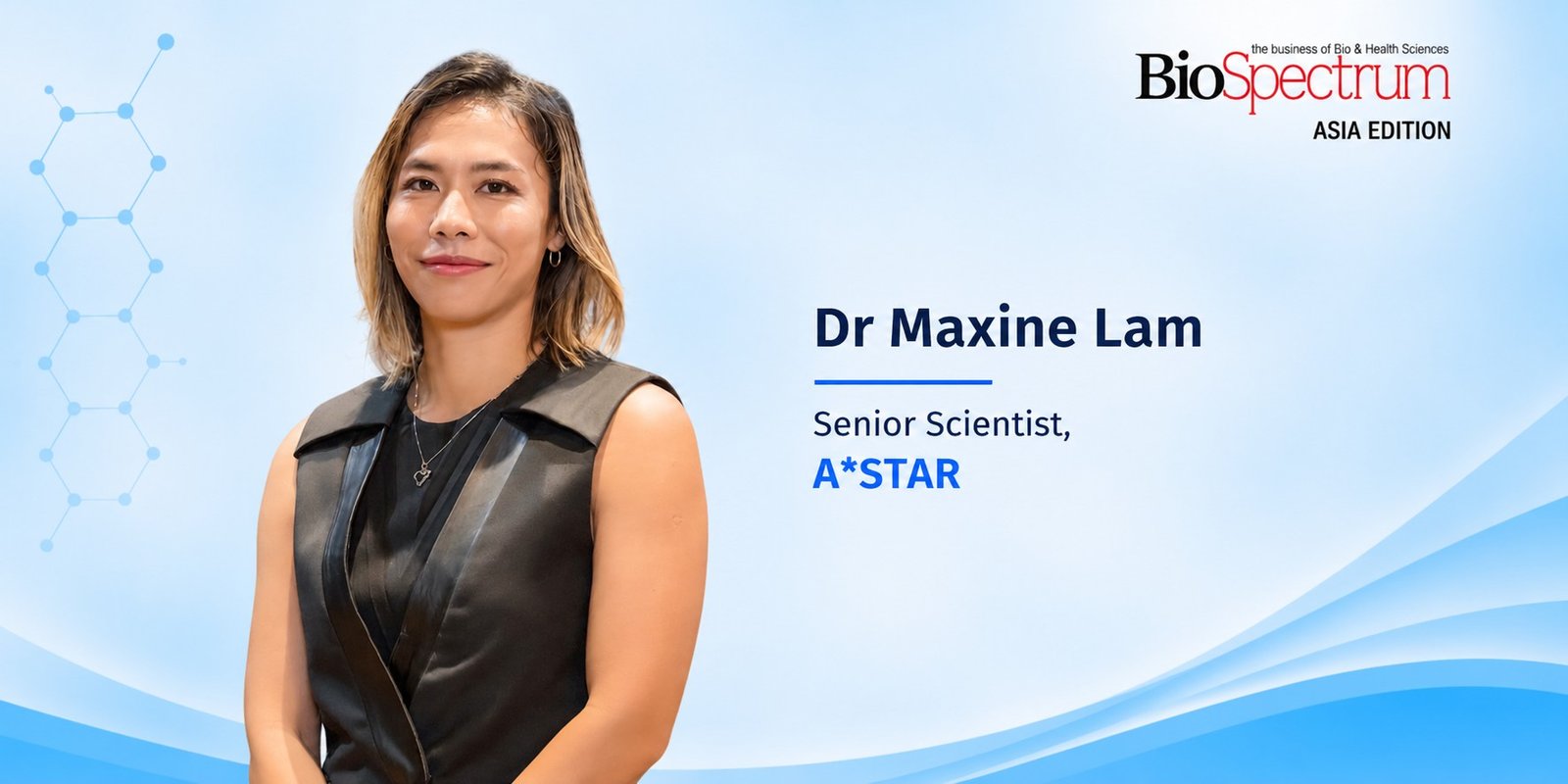
Stress urinary incontinence can affect women’s daily activities, confidence and quality of life, yet the condition often remains under-discussed. For Dr Maxine Lam, Senior Scientist at A*STAR, observing patients’ experiences during a Singapore Biodesign fellowship revealed a need for treatment options that place comfort, long-term safety and lifestyle at the centre of development.
Her team is combining patient imaging, computational modelling and device prototyping to investigate an alternative approach. The research remains at an early stage, with findings from a recently completed MRI study expected to inform further design and testing.
In this interview, Dr Lam discusses the unmet need, the anatomical questions shaping her research and how support from the L’Oréal-UNESCO For Women in Science programme will help advance the work.
What inspired you to focus your research on stress urinary incontinence, and what challenges do women face when seeking help for the condition?
The observation came when I was an Innovation Fellow with Singapore Biodesign. Our specialty that year was Obstetrics and Gynaecology, and while sitting in clinics observing clinicians interact with patients, we kept observing women coming to the clinics for various issues but consistently mentioning that they also had urinary incontinence (UI).
When we dug a bit more into this topic, spent time discussing this with doctors, and even sent out our own survey to friends and family on this topic, we finally realised the size of this problem. So many women had UI, and the majority of them had the stress-type of UI, or SUI, which is basically when leaks occur during abdominal stress events like a sneeze or during sports.
We also realised many sufferers were very willing to speak to us about their problems and were actively searching for solutions, but they were not very happy with the treatment options out there. So we did more research, and when we started peeling back all the layers of why women do not seek treatment, or if they do seek treatment, why they remain symptomatic or avoid certain treatments, we realised there was a real need for new solutions in this space.
Around 15% of women in Singapore have SUI to some degree, making this quite prevalent. In some countries, these prevalence estimates can go up to two in five. Yet you would not know it because hardly anyone talks about it.
I think a lot of women, especially in Asia where we are generally more private about these sorts of issues, do not really want to discuss it with their friends, let alone a medical professional. They might try to self-treat with pelvic floor trainers or cope by wearing pads.
So many women have lived with this condition for so long that they might feel it is just a part of their life now, not realising all the little ways that it affects their lives, like the extra spend on pads and other hygiene items, the constant thoughts at the back of their mind to control their liquids and manage their bathroom access, the avoidance of certain activities and sports, or in some cases even their sex lives.
How is your research improving understanding of the anatomy involved in stress urinary incontinence? How has that understanding shaped the design of the medical device you are developing?
When we began designing solutions to address this treatment gap, we realised that there was a real lack of innovation in this space that placed patient comfort and lifestyle at the forefront of the design.
To use a simple analogy, a lot of the solutions approached treating this condition like tightening a leaking tap, so they place implants around the urethra to help it stay closed or to immobilise it. It is the obvious solution, and it is quite effective too.
But the risk of this approach is that you are placing these long-term implants in a highly vascularised and innervated part of the anatomy that also changes significantly over time in a woman, especially after menopause. So while they work very well for most women, in the unfortunate minority where these implants migrate, it can cause significant issues and they are challenging to remove completely.
When our team examined this challenge, I felt there had to be other ways to approach it. As a scientist, the first thing I did, of course, was a deep dive into the literature. I looked into history, surgical reviews and patents to see how others have tried to treat SUI differently—what worked, what did not, and why.
Ultimately, I realised that I was working on a problem with incomplete foundational knowledge. We simply did not know enough about the female anatomy in this pathological context to design alternative treatments to this problem.
For the longest time, the field had concentrated on what happens in SUI at the level of the bladder neck and urethra. There was almost no reliable information on how the other pelvic organs may be involved. So together with Dr Yong Jin and Dr Anna Lai at Singapore General Hospital (SGH), we devised a study to image patients with SUI to build a more holistic anatomical model of SUI.
The model provides insights into the anatomy involved in SUI, besides the urethra. The goal is not only to further our understanding of SUI pathology, but to also directly inform the design of our alternative treatment.
What needs are you hoping the device will address for patients, and how are you considering effectiveness, long-term safety and comfort in its development?
We find that patients who have moderate to severe symptoms—so those using, say, three pads or more a day—are really underserved by the current treatment options. So we are really designing the solution to serve their needs, and we need to make sure the device has sufficient efficacy to help them relieve their symptoms.
Even in patients with more serious symptoms, not all of them consider the permanent mesh sling option by default. That is because SUI is a quality-of-life issue, so patients have a lot of say in their treatment plan. For many, the long-term risk of side effects from mesh slings that can emerge five to ten years later, albeit low risk, can put them off this particular treatment.
Our discussions with patients and clinicians have emphasised time and again that their priorities for a treatment are long-term safety, comfort and minimal disruption to their daily lives. So we are designing with that at the forefront of our minds.
What stage has the research reached, and what studies or milestones are needed before the device could be used in clinical practice? How do you hope this work will contribute to women’s health research and treatment in Singapore?
The research is in the early stages. We have just completed our MRI study and are now busy analysing the images and converting them to computational models.
On the device prototyping front, we are establishing the design parameter space for the device to understand the relationship between various features and device efficacy. We are running through a couple of design iterations, and our goal is to settle on one lead design by the middle of next year.
We are performing a lot of the testing now on benchtop models that replicate what we think is happening in the human body, based on what we can find from the literature and what we know from patient clinical data. But once the information from the MRI study comes through, we will be able to build much more accurate benchtop models and conduct high-fidelity testing of these device prototypes.
The L’Oréal-UNESCO For Women in Science grant will be particularly helpful in supporting the analysis of the MRI images and integration of these insights into our computational and benchtop models.
Medical device development is not a short road, but we hope to be able to get to the stage of a clinical-grade device in five years. It really depends on how fast we can get the initial prototyping and testing done, while balancing device efficacy, long-term safety and ease of surgical insertion.
Even before we get to the clinical-grade device, the knowledge we build around SUI will be impactful for women’s health research. As I described before, there is a real lack of understanding around female biology and anatomy in certain pathologies, like SUI, despite these conditions being very prevalent and patients actively seeking solutions.
What little we do know is based on decades-old knowledge that has not been updated with the tools of today. We hope that our work encourages more researchers and clinicians to look for more unmet needs hiding in plain sight in women’s health. We also hope that after we release our MRI study’s findings, others can find it a useful resource.