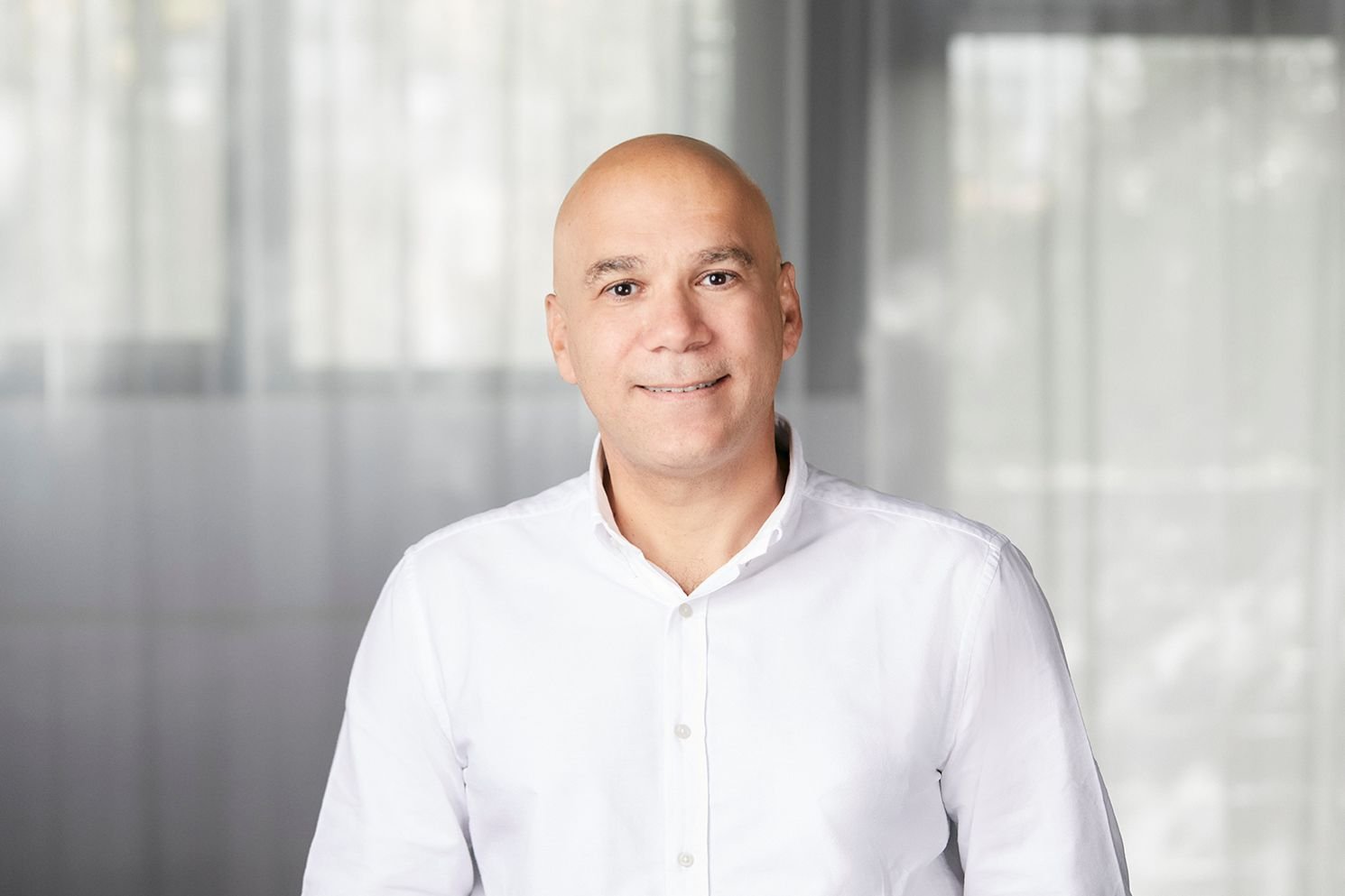

A blood test developed at Johns Hopkins to detect multiple cancers became the foundation for Thrive Earlier Detection, which Exact Sciences acquired in a deal worth up to US$2.15 billion. In conversation with BioSpectrum Asia, Paul Nkansah, senior director of corporate research partnerships at Johns Hopkins, and Chris Brandt, CEO of UpSurge Baltimore, discuss how the region can help more founders win major customers, grow their businesses locally and reinvest in the next generation of biotech companies.
Questions 1–3 are answered by Paul Nkansah, Senior Director of Corporate Research Partnerships at Johns Hopkins University.
What is driving Baltimore's current life sciences investment momentum, and why is capital flowing into the sector now?
Baltimore has always had extraordinary scientific assets. What is different today is the infrastructure and experience surrounding that science – the ability to identify promising discoveries earlier, de-risk them, build companies around them, connect them with industry and investors, and move them toward patients and markets. The science has always been here; the commercialization machinery around it has become much stronger. Johns Hopkins is an important part of that evolution and one of the primary vehicles through which Baltimore converts research into commercial opportunity. Over the past decade, Johns Hopkins startups have raised approximately $4.8 billion in venture capital and achieved 45 company exits.
Today, Johns Hopkins maintains more than 200 active corporate collaborations, and over the past decade it has attracted an estimated $900 million in business-funded research expenditures. That creates multiple pathways for private capital to engage – through startups, licensing, sponsored research, venture formation, and strategic partnerships.
What is especially encouraging is that more of that capital is staying locally. In FY2026, Johns Hopkins-affiliated startups raised $151 million, with 77% – $116 million – remaining in Baltimore. That suggests the region is becoming better not only at generating investable science, but at providing companies and investors reasons to build around that science here. At the same time, organizations such as Blackbird Laboratories and expanded incubator and laboratory infrastructure are adding translational capital, company-building expertise, and physical capacity around the universities. That matters because some of Baltimore's deepest strengths – oncology, diagnostics, neuroscience, immunology, precision medicine, medical devices, and increasingly AI-enabled healthcare – are also areas receiving significant industry and investor attention. Investors are increasingly seeing not simply excellent science, but a more repeatable system for turning that science into commercially actionable opportunities.
What differentiates Greater Baltimore from other emerging US life sciences hubs competing for companies, talent and venture capital?
Baltimore's differentiation is not any single institution or asset. It is the concentration of capabilities across the translational continuum. Within a remarkably compact ecosystem, companies can access world-class basic science, engineering, medicine, public health, major academic health systems, clinical investigators, and patient populations – and connect those capabilities to the broader Maryland-Washington biohealth corridor, including NIH and FDA.
Johns Hopkins is particularly important to that proposition because it combines one of the world's largest research enterprises with a commercialization platform built to move discoveries beyond the university. Through JHTV and its FastForward startup platform, discoveries can progress from intellectual-property development into licensing, sponsored research, startup formation, incubation, venture financing, and partnerships with global companies. Over the past decade, more than 500 companies in total have connected with Johns Hopkins faculty expertise, technologies, research capabilities, and clinical and translational resources.
Many regions can point to excellent universities; fewer can connect scientific discovery, clinical validation, company creation, and industry engagement at this scale. Baltimore is also increasingly surrounding those institutional strengths with complementary assets such as Blackbird Laboratories, the University of Maryland BioPark and additional laboratory and company-building capacity.
The region also benefits from scientific breadth. Baltimore is not dependent on a single therapeutic area or modality; it has significant capabilities across therapeutics, diagnostics, imaging, medical devices, genomics, digital health, AI, engineering and population health. That creates opportunities for multidisciplinary collaboration as the boundaries between traditional life sciences, engineering and computation increasingly disappear.
Baltimore therefore does not need to replicate Boston or San Francisco. Its opportunity is to build around what is distinctive here: exceptional biomedical and clinical expertise, engineering and public health capabilities, access to the federal biomedical ecosystem, and an increasingly sophisticated infrastructure for translating those assets into commercial value.
How effectively is Baltimore converting its strengths in universities, healthcare systems and scientific research into commercially scalable companies and successful exits? Where do the biggest gaps remain?
There is now substantial evidence that Baltimore can convert academic science into commercially important companies and products. Johns Hopkins discoveries have progressed from the laboratory through venture financing, clinical validation, regulatory approval, market adoption, and acquisition by major global healthcare companies.
Thrive Earlier Detection is a strong example. Founded around CancerSEEK, a Johns Hopkins-developed multi-cancer blood-testing technology, Thrive launched with a $110 million Series A, raised an additional $257 million and was acquired by Exact Sciences in a transaction valued at up to $2.15 billion. Personal Genome Diagnostics similarly translated Johns Hopkins cancer-genomics research into an FDA-cleared clinical platform before being acquired by Labcorp for approximately $450 million upfront, plus potential milestone payments.
Importantly, not every successful academic technology needs to become a startup. Johns Hopkins discoveries also have moved through licensing into major commercial products. Foundational Johns Hopkins IDH research contributed to VORANIGO® (vorasidenib), the first targeted therapy approved for Grade 2 IDH-mutant glioma. Johns Hopkins research that helped establish LAG-3 as an immune checkpoint contributed to relatlimab and Bristol Myers Squibb's OPDUALAG®. And more than two decades of Johns Hopkins research produced PYLARIFY®, a PSMA-targeted PET imaging agent that became the first radiodiagnostic to surpass $1 billion in annual sales.
The next challenge is different from the one Baltimore faced a decade ago. We have become much better at creating companies from academic science. The opportunity now is to become consistently excellent at scaling and retaining those companies in Baltimore. That requires deeper pools of growth-stage capital, more serial biotechnology executives who have taken companies through clinical development and commercialization, continued expansion of specialized infrastructure, stronger strategic corporate connections, and more recycling of successful founders, executives, and investors into the next generation of companies. The objective should therefore not simply be more startups or more patents. It should be more high-quality companies that reach meaningful clinical and commercial milestones, attract national and international capital, build significant operations here, and ultimately recycle talent and capital back into Baltimore. The share of startup capital staying local is moving in the right direction. The next test is whether Baltimore can turn that progress into a durable flywheel of companies, talent, and investment.
Questions 4-7 answered by Christopher (Chris) Brandt is the CEO of UpSurge Baltimore
UpSurge Baltimore is a technology and startup ecosystem builder that operates under the Greater Baltimore Committee to help founders launch and scale companies across the Baltimore region.
With 55% of the region's venture investment going into life sciences in 2025, is this concentration sustainable, and what will be required to maintain investor confidence over the next three to five years?
Healthcare and biotechnology are great sectors to be concentrated in. The $309 million invested across 32 life sciences deals in 2025 reflects one of Greater Baltimore's most important competitive advantages, supported by world-class research institutions, healthcare systems and scientific talent.
The key to sustaining investor confidence is translating those strengths into commercially successful companies. That means developing technologies that address meaningful problems, attracting experienced entrepreneurs and management teams, and helping companies secure customers, financing and partnerships that allow them to scale.
We should also recognize that life sciences investment can be cyclical and capital-intensive. Diversification into adjacent opportunities like AI, cybersecurity and advanced technologies will make our ecosystem more resilient.
Ultimately, investors are looking for returns. Our priority should be building more successful businesses, demonstrating that companies can scale in Greater Baltimore and creating a virtuous cycle in which successful entrepreneurs and investors reinvest in the region.
How effectively is Baltimore converting its strengths in universities, healthcare systems and scientific research into commercially scalable companies and successful exits? Where do the biggest gaps remain?
Baltimore has made significant progress, but we have considerable opportunity to improve the rate at which world-class research becomes successful businesses.
Johns Hopkins Technology Ventures is a strong example of what's possible. In FY2026, it generated $65 million in licensing revenue across 120 agreements, with 349 products on the market. Johns Hopkins-affiliated startups also raised $151 million in venture capital, with 77% of that funding going to Baltimore companies.
We're also seeing encouraging innovation coming directly from our healthcare systems. The University of Maryland Medical System's iHarbor Innovation Center has commercialized Gallion Health, demonstrating how solutions developed to address real-world healthcare challenges can become independent businesses serving a national market.
The biggest gaps remain access to growth capital, experienced entrepreneurial leadership and industry partnerships. We need to help more companies move beyond the earliest stages of development, secure major customers and scale nationally.
We also need to be intentional about keeping more of the economic value here. Successful exits are important, but the longer-term opportunity is building a self-sustaining ecosystem where successful founders, executives and investors reinvest their capital and experience in the next generation of companies.
As AI increasingly intersects with drug discovery, diagnostics and healthcare delivery, how do you expect Baltimore's traditional life sciences strengths to converge with AI rather than compete with it for investment?
Baltimore has made significant progress in commercializing research, but we have considerable opportunity to turn more of our world-class innovation into successful businesses.
Johns Hopkins Technology Ventures is a strong example of what's possible. In FY2026, it generated $65 million in licensing revenue across 120 agreements, with 349 products on the market. Johns Hopkins-affiliated startups also raised $151 million in venture capital, with 77% of that funding going to Baltimore companies.
Maryland's unique hospital financing model is another competitive advantage. By rewarding better patient outcomes and controlling healthcare costs, it creates incentives for health systems to adopt innovations that improve care and efficiency. This positions Baltimore particularly well for commercializing AI and other healthcare technologies.
The biggest opportunity is strengthening the path from research to commercial success. That means attracting experienced entrepreneurial leadership, connecting startups with major customers and industry partners, and helping more companies scale nationally.
Ultimately, success means not just producing more successful companies and exits, but retaining more of the economic value they create and building an ecosystem where entrepreneurs and investors reinvest in the next generation of Baltimore businesses.
Looking toward 2027, what developments should investors and life sciences executives watch for in Baltimore, and what would signal that the region is moving from an emerging cluster to a globally competitive life sciences hub?
I would watch particularly closely for the emergence of companies applying AI to healthcare and life sciences, and for deeper commercial partnerships between startups and our major research and healthcare institutions.
Johns Hopkins' Bayesian Health is a compelling example. Its AI-powered sepsis detection technology received FDA clearance in 2026 and is being deployed in hospitals nationally. Another is Baltimore-based b.well Connected Health, which is building the infrastructure to make fragmented healthcare data accessible and useful for AI-powered healthcare applications. Its partnerships with major healthcare organizations and technology leaders, including Google and OpenAI, demonstrate that companies built in Baltimore can play an important role in transforming healthcare nationally.
We should expect more opportunities like these, particularly in earlier disease detection, precision medicine, drug development and technologies that help health systems improve outcomes while controlling costs.
But the most important indicators will be commercial rather than scientific: more companies raising significant outside capital, securing major customers, achieving regulatory milestones and expanding nationally and internationally.
Ultimately, Baltimore becomes a globally competitive life sciences hub when successful company formation, scaling and exits become consistent and repeatable, and when more of those companies choose to build their long-term futures here.