
You joined Roche Malaysia in 2021. What have been some of your key priorities over the past couple of years for your cluster, and how have these priorities evolved in response to changing healthcare needs and system pressures?
When I joined Roche Malaysia, one of my first priorities was ensuring continuity of care during the pandemic. We focused on building resilient supply chains and supporting healthcare providers in maintaining treatment access for patients who needed care during a global health crisis. After COVID-19, the focus shifted to supporting long-term, system-level improvements in healthcare. For breast cancer, we collaborate with health system stakeholders to support the WHO’s Global Breast Cancer Initiative (GBCI) to reduce mortality by 2.5 per cent annually, potentially saving 2.5 million lives over 20 years.
The latest UN Political Declaration on Non-Communicable Diseases (NCDs) calls for integrating breast cancer into national health programmes to strengthen cancer care and cut premature mortality by one-third by 2030. It urges expanded access to diagnostics and treatment and promotes a whole-of-government and whole-of-society approach.
We have been working in partnership with the Ministry of Health in Malaysia (MOH) to support efforts in expanding the reach of cancer care so that women can receive care within their communities and closer to their families. Decentralising cancer care by training healthcare professionals, nurses, building capacity for treatment and collecting data so that resources can be aligned to areas of highest priority has been the focus of our memorandum of understanding with the ministry of health. Currently, decentralised care is already available in a few districts, we are now expanding to 20 new districts, expanding nurse training from 100 to many more and supporting efforts to bring care closer to communities and help reduce pressure on tertiary hospitals.
We work with our partners to identify gaps and opportunities across every step of a woman’s journey: awareness, screening, diagnosis, treatment, and continuous care. We listen to patients, communities, and medical professionals to understand lived experiences and challenges. This real-world evidence informs data-driven, scalable partnerships that bring meaningful and lasting change.
Breast cancer remains one of the most pressing health challenges in Southeast Asia, with mortality rates still high due to late-stage diagnosis. From Roche’s perspective, what are the biggest obstacles to early detection and effective intervention in this region?
Southeast Asia is facing multiple breast cancer care disparities, marked by disproportionately high prevalence, incidence, mortality, and a younger age of onset. Over half a million women in the region are living with or have survived breast cancer in the past five years, and the disease accounts for one in seven new cancer cases, with 41 deaths for every 100 new cases, far higher than Eastern Asia’s 23 per 100. Across Indonesia, Philippines, Vietnam, Malaysia and Thailand, breast cancer claims about 130 lives every single day.
Beyond the individual health impact, breast cancer also poses substantial socio-economic consequences. According to regional health economics studies, 48 per cent of patients in Southeast Asia experience financial catastrophe within one year of diagnosis, often affecting families and caregivers as well.
One of the key challenges is late diagnosis. In Malaysia, nearly half of breast cancer cases are detected at stages III and IV, which significantly reduces survival chances.
While awareness and screening are improving, early detection only makes a difference when women can access timely, appropriate and quality care. Access to specialist diagnostics, treatment and supportive care remains inconsistent, and many women travel long distances to receive care, which can disrupt continuity of treatment. These challenges reinforce the importance of strengthening system readiness, building capacity and aligning resources to evolving standards of care.
There is growing recognition among stakeholders that breast cancer is not only a health issue but also a social and economic priority, affecting families, communities and national productivity. Ultimately, investing in women’s health is investing in Southeast Asia’s future.
Malaysia continues to serve as a regional healthcare and innovation hub. What are some good examples of progress in Southeast Asia?
We are encouraged by the progress Malaysia has made in breast cancer care, including the government’s continuous evaluation and adaptation of its National Strategic Plan for Cancer Control Programme 2021–2025, which sets clear targets for early detection and treatment equity. But with breast cancer accounting for 16.2 per cent of all new cancer cases and 11.1 per cent of cancer-related deaths nationally, the urgency for action remains. We have had the opportunity to collaborate through public–private partnerships, such as our recent memorandum of agreement with the MOH and the National Institute of Health Malaysia (NIH) to launch Clarum, a web-based disease registry for improved, data-driven care for cancer and other conditions, and Cancer Care Closer to Community, which decentralises treatment through patient navigation programmes, reducing delays in diagnosis.
Malaysia’s experience positions it well within ASEAN to support regional knowledge exchange and collaboration in addressing shared breast cancer challenges. Their successes can be adapted and scaled regionally to improve outcomes across Southeast Asia.
We also see encouraging developments elsewhere in Southeast Asia. Thailand’s ‘Cancer Everywhere’ programme, part of its Universal Coverage Scheme, has helped broaden access to cancer treatment and medications. This includes the nationwide ‘Cancer Warrior’ screening programme, which scales and improves access in Thailand, as well as initiatives like genomic testing pilots and health technology assessments, which support expanded access to personalised medicine and advanced diagnostics.
In the Philippines, stakeholders, including Roche, have contributed to efforts that support the implementation of the National Integrated Cancer Control Act (NICCA) as a national framework for strengthening cancer care as part of long-term planning. Through initiatives such as Mission Leapfrog 2030, we worked with partners to explore how integrated care models and digital solutions can complement national priorities under NICCA and the Universal Health Care Law. These efforts provide early learnings that may help inform wider application.
These developments reflect how collaboration across stakeholders, supportive policy frameworks and innovation can help improve patient experiences and strengthen system performance.
Roche often highlights the importance of putting patients at the center of innovation. How are you integrating patient voices, data, and real-world insights into your strategies for breast cancer care?
Our goal is to make every step of the patient journey more effective and inclusive, because the patient is at the heart of everything we do. We listen to patients and clinicians to understand their real-world challenges, combining those insights together with clinical data to shape solutions, digital tools, and personalised care that makes a measurable difference.
For example, The Malaysian Breast Cancer Summit (MBCS) enabled us to turn this philosophy into action by gathering strategic insights from patient advocates and clinical partners. These evidence-based inputs go beyond traditional R&D, highlighting systemic gaps from financial toxicity to treatment adherence and guiding us to prioritise initiatives that deliver meaningful value across the entire patient journey. This directly aligns with our patient navigation collaborations, where clearer pathways, coordinated support, and timely interventions help patients move through the system with less stress and fewer delays.
Looking ahead, what are Roche’s key strategic priorities and areas of focus in Malaysia over the next few years? How do you envision the company continuing to drive innovation, collaboration, and impact across the healthcare ecosystem?
At the heart of our work is a shared commitment to ensure that every woman facing breast cancer has access to quality, innovative and evidence-informed care, supported by stronger health systems and trusted partnerships across the healthcare ecosystem. To achieve this, we will continue to collaborate across the entire health ecosystem, including policymakers, medical professionals, community leaders, and patient groups, to support stronger infrastructure, strengthen system readiness, and bring care closer to the communities and women who need it most.
As part of this effort, we aim to help make breast cancer care more personalised and relevant to each woman’s situation by drawing on clinical insight, lived experience and data to inform decision-making. The fact that hormone receptor-positive breast cancer cases are particularly common, highlights the importance of approaches that are tailored, practical and meaningful for women and their families.
Additionally, we will continue to work with partners to raise the urgency and importance of breast cancer as both a women’s health priority and a broader social and economic imperative.
We believe progress happens when everyone comes together with a common purpose: to give women facing breast cancer a better chance at life, and our societies the best chance to thrive. That’s what drives us every day.
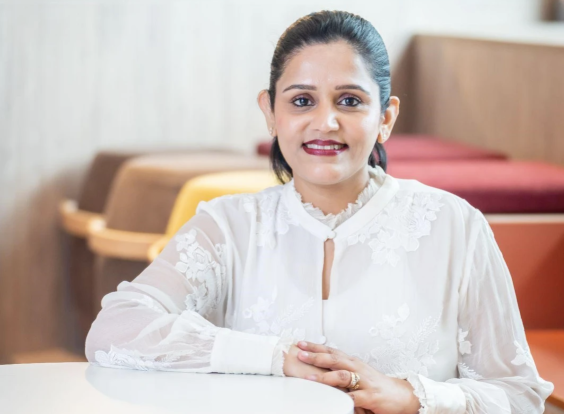
Ayesha Siddiqui