
In New Delhi in May 2026, the Australian High Commissioner hosted a Health Leaders Roundtable convened with the Australian and New South Wales governments. The question before it was whether Ayush and natural products should take a formal place in the Australia-India economic growth corridor, alongside the sectors already established there.
The numbers put on the table justified the question. India's Ayush sector is valued at approximately $43 billion, has grown roughly eightfold in a decade, and exports to more than 150 countries. The World Health Organization estimates that approximately 80 per cent of the world's population uses some form of traditional medicine, and its Global Traditional Medicine Centre at Jamnagar, the first facility of its kind, exists to apply modern science and digital health methods to that evidence base, supported by an Indian commitment of $85 million over a decade. The economic case is clear, and the care case is stronger. In health systems under pressure from chronic disease and ageing populations, validated traditional and integrative practice extends primary care into communities that clinical services reach with difficulty.
Southern Cross University came to that table with a specific proposition, and with the distinctive capability to support it.
The university behind the proposition
Southern Cross University was established by an Act of the New South Wales Parliament in 1993 and opened on 1 January 1994. The Act gives the University a single object, the promotion of scholarship, research, free inquiry and academic excellence, and directs it to have particular regard to the needs of the north coast region of the State. That instruction has proved formative. It has produced an institution that treats research quality and demonstrated impact as one question rather than two, and that selects its work by reference to identified need.
Our campuses span metropolitan, peri-urban and regional Australia: Lismore and Coffs Harbour in northern New South Wales, Coolangatta on the Gold Coast, and campuses in Sydney, Melbourne, Brisbane and Perth. Lismore is the founding campus, 75 hectares of subtropical grounds housing the University's research precinct. The spread is deliberate, because regional Australia generates the agricultural, marine and health questions we are best placed to answer.
Thirty-two years is a short institutional life, and the results are substantial. Times Higher Education placed Southern Cross among the world's top 500 universities in its 2026 World University Rankings, and among the top 100 universities under 50 years of age. In health, our Nursing program ranks in the global top 225 in the QS World University Rankings by Subject 2026. Scale and youth confer agility. Decisions that take longer-established institutions years take us months.
That agility is visible in a record of firsts. Southern Cross was the first Australian university to offer degrees in naturopathic medicine and the first to offer a degree in regenerative agriculture. It was also the first to redesign its entire course portfolio around a single teaching model: the Southern Cross Model delivers short, immersive terms, with fewer units studied concurrently and active learning in small classes. Research is organised through four impact clusters rather than disciplinary boundaries: Harvest to Health, covering agriculture, plant science, food and natural medicine; ZeroWaste, advancing the circular economy; Reefs and Oceans, addressing coral resilience and marine ecosystems; and Catchments, Coasts and Communities, addressing water quality, land use and disaster recovery. Each cluster begins from an identified need and assembles capability against it.
An impact strategy, not a recruitment strategy
Our engagement with India follows the same principle. It is not a student recruitment exercise, and it does not involve a branch campus. It is an impact strategy, situated within bilateral, national and sector-level priorities, and directed at opportunities the two countries hold in common. Its policy anchors are explicit: BioE3, the agenda of the Ministry of Ayush, and the regulatory work of FSSAI and CDSCO.
Southern Cross has a long record of collaboration with Indian universities, concentrated on the areas of common innovation set out above. The purpose of those partnerships is to build an ecosystem of values-aligned institutions committed to impact, with knowledge mobilisation held as a core function of the work rather than a by-product of it. They span health and agricultural sciences and include: Patanjali Research Institute, SRIHER, KLE Academy of Higher Education and Research, Amrita Vishwa Vidyapeetham, SRM Institute of Science and Technology, Tamil Nadu Agricultural University, and the Indian Institutes of Technology at Palakkad and Dhanbad.
Several are already producing work. Our Research and Education Hub with KAHER in Belagavi, launched in April 2026, covers chronic disease management, primary healthcare, maternal and infant care, and health workforce development. Southern Cross nursing students undertake work-integrated learning placements in the Indian primary healthcare system twice each year under the New Colombo Plan. Joint work on delirium prevention, drawn from our NHMRC-funded PREDICT trial, is progressing toward implementation at KLE Hospital, alongside a trauma-informed care program for midwives.
From plant to patient
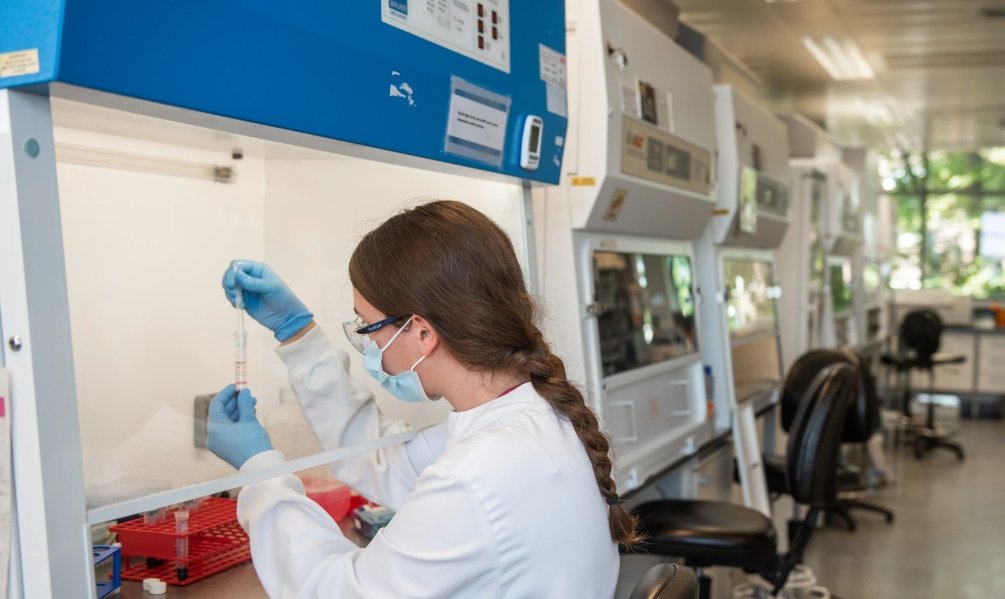
Harvest to Health is where the strategy concentrates, because it is where our capability is distinctive. Southern Cross holds the natural products value chain end to end, from soil and plant science through phytochemical analysis to clinical trial and clinical practice. The National Centre for Naturopathic Medicine, a world leader in naturopathic and integrative medicine, sits alongside a Clinical Trials Unit and an Analytical Research Laboratory accredited by Australia's Therapeutic Goods Administration for phytochemical analysis and quality testing of pharmaceutical raw materials and products. Few universities anywhere hold plant science and integrative medicine within one institution. Fewer hold the regulatory-grade analytical capability that allows a therapeutic claim to be tested independently.
That capability addresses a defined commercial problem. Growth at the rate the Ayush sector is achieving meets a constraint in evidence and quality assurance. Batch-to-batch variability in botanical raw material, incomplete characterisation of active constituents, adulteration risk in extended supply chains and trial designs predating current reporting standards each present to an overseas regulator as unquantified risk, at measurable cost in rejected consignments and constrained pricing. Independent analytical validation and clinical evidence generated to international standard resolve that constraint. An accredited Australian laboratory result, and trial data produced under Australian ethics and governance, carry recognition in Europe, North America and across ASEAN. That recognition is the value on offer to Indian manufacturers.
Where the work goes next
The immediate focus is narrow and practical: analytical validation of Indian botanical raw material and finished product, joint clinical trials capable of supporting claims in regulated markets, and shared work on the quality standards that govern both. This builds a foundational confidence.
The effects then extend beyond therapeutics. Quality assurance in natural products directs attention back along the supply chain to provenance, cultivation practice and soil condition, which is where regenerative agriculture and our plant science capability apply. A therapeutics partnership becomes an agricultural sciences partnership, and then a conversation about standards and trade. Each step builds the evidence base and sets the foundation for natural products to occupy the economic corridor on its own terms.www.scu.edu.au/connect
Ben Roche, Pro Vice-Chancellor (Research and Education Impact), Southern Cross University