
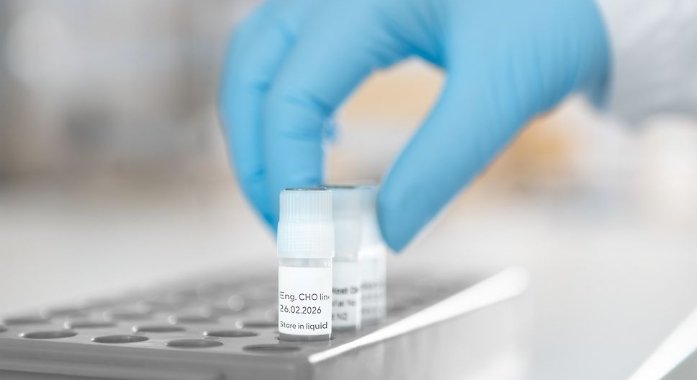
US-based Sartorius is addressing the increasing demand for faster and more efficient cell line development (CLD) by launching a new genetically engineered CHO host cell line that improves productivity and efficiency. The team leveraged proteomic profiling and targeted genome editing to generate the rational-design host cell line, which multiplies productivity by up to three-fold.
Sartorius tested the new CHO host cell line across multiple CLD campaigns from DNA to lead clone expressing a range of different therapeutic proteins. At five-liter bioreactor scale, the new host demonstrated up to a two-fold increase in expression titers, and up to a three-fold increase in productivity when directly compared against lead clones derived from the original wild-type CHO host in traditional fed-batch processes.
The cell line enabled this productivity increase while maintaining high product quality. This robust performance has shown to be consistent across IgG1, IgG4, Fc-fusion, and bispecifics, making it well-suited for a wide range of biotherapeutic modalities.
In intensified bioprocessing, the engineered host also supports higher titers and long culture duration in continuous perfusion. For a selected clone expressing a monoclonal antibody, Sartorius observed a two fold increase in titer per day along with maintained high cell density and viability (more than 80 percent) for a culture duration of up to 28 days.
Sartorius has extensive experience in CLD. The company has completed more than 330 projects and has a strong regulatory track record, with more than 85 molecules in clinics with 10 achieving market approval.