
DayOne, a Singapore-headquartered global data center developer and operator and Cortical Labs, a biological computing startup in Melbourne, announced a partnership to build Singapore’s first major Biological Data Center, a first of its kind outside Australia. This brings wetware-based compute to one of the world’s most sustainability-driven digital infrastructure markets. As part of the partnership, DayOne will provide capital and strategic input, and will collaborate with Cortical Labs and the Yong Loo Lin School of Medicine, National University of Singapore (NUS Medicine) to establish a prototype to support the development and deployment of the wetware computing platform.
A bio data center is a next-generation computing facility that utilises “wetware”- living biological neurons grown from stem cells, instead of traditional silicon chips to process information and power AI systems. Unlike standard data centers that rely on energy-intensive servers, a bio data center harnesses the natural efficiency of brain-like organoids, which can function on a fraction of the wattage required by digital computers.
Cortical Labs recently announced the launch of the world’s first Bio Data Center prototype in Melbourne. DayOne and Cortical Labs will progress site design and operational planning, with an initial focus on performance and efficiency benchmarking for wetware-based compute systems. They will identify governance, biosafety and compliance frameworks suitable for Singapore’s operating environment along with collaboration pathways with research institutions and industry partners.
The collaboration comes as Singapore expands data center capacity under tighter sustainability guardrails. The Government is making at least 200MW of new capacity in DC-CFA-2 available, while reinforcing higher standards for energy efficiency and greener energy pathways under the Infocomm Media Development Authority’s Green Data Center Roadmap. Cortical Labs expects to commence with an initial deployment at the NUS, comprising a single rack of 20 Cortical Cloud units.
Building on the initial validation phase at NUS Medicine, the collaboration is structured to transition into a live deployment environment within a DayOne commercial data center facility in Singapore, where operational integration will be tested under real-world load conditions, including defined electrical envelopes, contained environmental management systems and compatibility with standard power distribution and cooling infrastructure. This initiative will form part of DayOne’s broader live data center embedded deployment enablement platform, anchoring a dedicated frontier compute vertical focused on AI innovation and advanced healthcare applications.
By providing a controlled pathway for integrating, benchmarking and refining emerging compute architectures within a production-grade, low-carbon facility, the platform will support neuro-inspired AI research, biomedical modelling and other healthcare use cases, while enabling progressive scaling within Singapore’s digital infrastructure ecosystem. The parties are exploring a phased expansion that could potentially reach up to 1,000 units deployed within a DayOne facility in Singapore, subject to technical validation and regulatory approvals.
By 2030, global data center capacity could reach 200 GW while Southeast Asian data-center power demand could quadruple from 2.6GW (2025) to 10.7GW (2035) in its base case, intensifying pressure on grids and emissions trajectories. Regional reporting has also highlighted a growing push for efficient water use and sustainable energy, as the data-center boom spreads across ASEAN.
Accelerating research with Singapore’s ecosystem
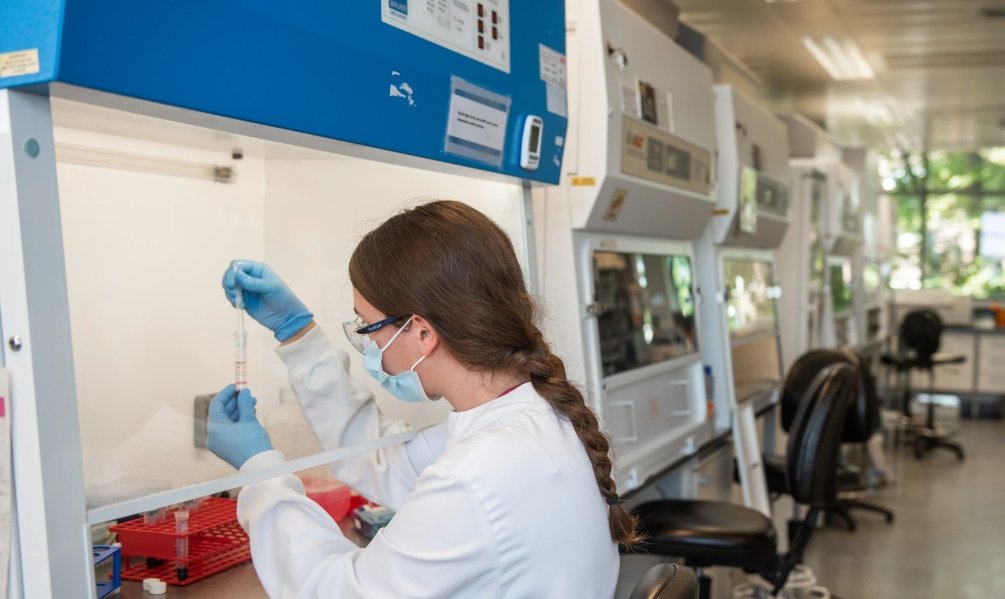
A key aim of the Singapore Bio Data Center will be to support research and innovation pathways - from drug discovery and biomedical science to energy optimisation and advanced AI applications. A crucial part of this effort involves leveraging NUS Medicine’s deep expertise in neurobiology research for the prototype biodata center. Under the supervision of Professor Rickie Patani, who is both a Professor of Neuroscience at NUS Medicine and the Director of the Neurobiology Programme at NUS Life Sciences Institute, cells will be cultured and grown in NUS Life Sciences Institute.