
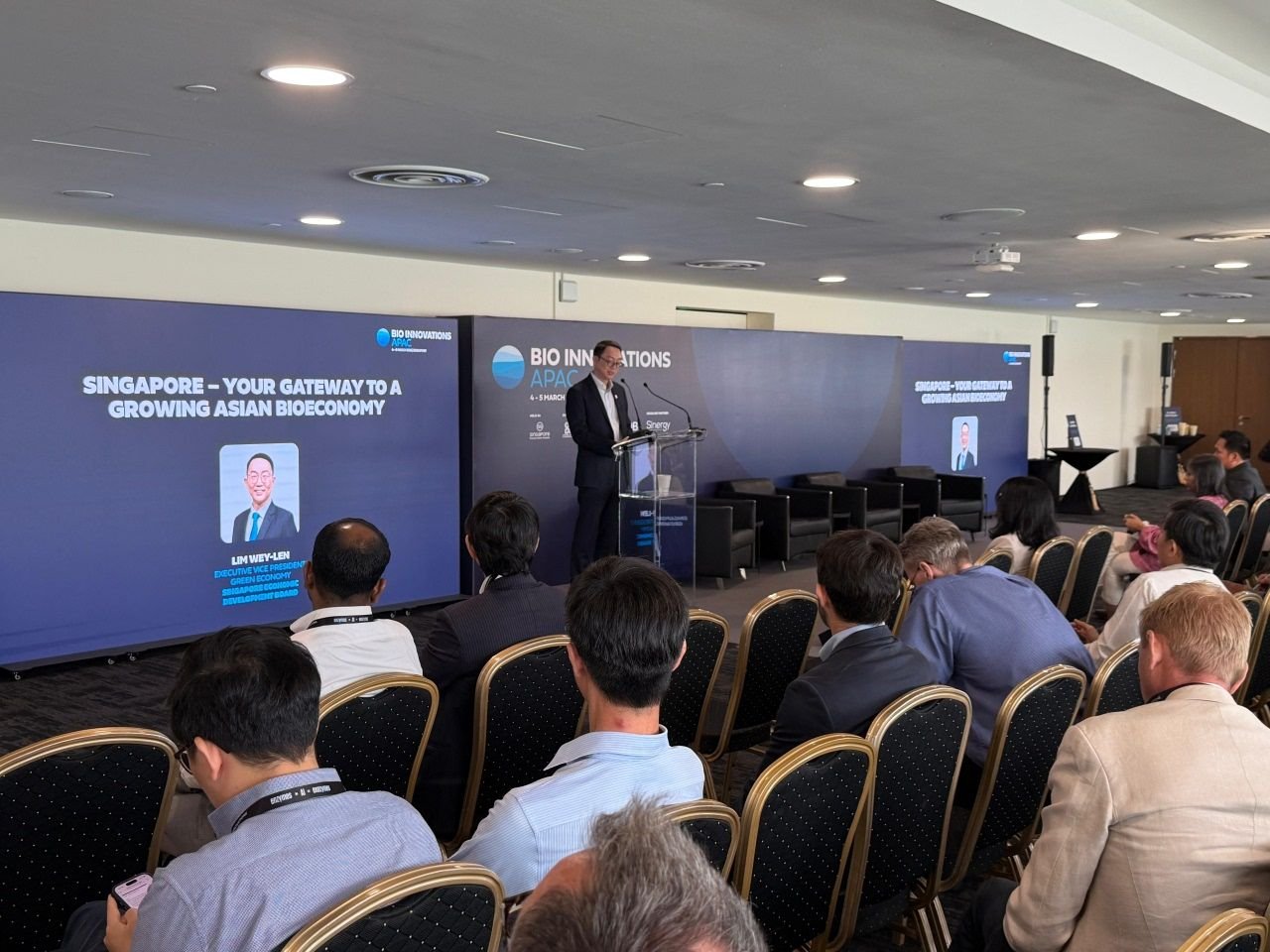
The Bioinnovation APAC 2026 forum, held in Singapore on March 4-5, was a landmark event that brought together over 250 bio-pioneers from across the globe to discuss, collaborate, and innovate in the field of industrial biomanufacturing. This two-day gathering was not merely a conference but a dynamic platform designed to foster partnerships, share cutting-edge insights, and address the challenges and opportunities in scaling biomanufacturing across the Asia-Pacific region.
Asia is well-positioned to capture opportunities in the bioeconomy, and Singapore serves as an ideal gateway to these. As Singapore continues to invest in our growing bioeconomy, we look to partner with companies to co-innovate, commercialise, and manufacture bio-products here for Asia.
At Bio Innovations APAC 2026, EDB EVP Wey-Len Lim highlighted three drivers reshaping the bioeconomy space: regulatory mandates creating market shifts, the rise of bio-based "drop-in" replacement chemicals, and novel bio-products delivering superior performance over traditional petrochemicals.
Lim furthur expalined, "Asia, home to 60% of the world’s population and 50% of global agriculture, offers compelling advantages for bioeconomy growth by combining rapidly expanding consumer markets with biodiversity resources. Singapore’s strategic location provides access to these markets and regional feedstock, while our diversity makes us an optimal base for regional product development. With established R&D capabilities across the industrial biotechnology value chain, and US$29b (S$37b) that will be invested between 2026 and 2030 via our national R&D budget, Singapore offers a complete ecosystem for bioeconomy innovation."
The event was characterized by a well-rounded agenda that combined structured sessions, pre-arranged one-on-one meetings, and informal yet impactful networking opportunities, creating an atmosphere of collaboration and forward-thinking energy. Participants engaged in over 400 scheduled meetings, underscoring the strong interest in direct collaboration and knowledge exchange, while the event’s vibrant and interactive format highlighted the region’s growing role as a hub for bio-based innovation.
The event began with a pre-event tour on March 3, organized by the Singapore Economic Development Board (EDB) and Alfa Laval, which set the stage for the discussions to follow. This tour provided participants with a glimpse into Singapore’s efforts to position itself as a leader in biomanufacturing, showcasing local initiatives and infrastructure that support the region’s bioeconomy ambitions.
Industrial Biomanufacturing Efforts in APAC
The formal proceedings on Day 1 opened with a keynote address by Jukka Kantola, Chair of the World Bioeconomy Association, who provided a global perspective on the bioeconomy. His speech emphasized the geopolitical and market-driven evolution of the bioeconomy, particularly how the Asia-Pacific region is emerging as a key player in industrial biomanufacturing. Kantola highlighted both the momentum and the gaps in the region, setting a tone of optimism tempered by the recognition of challenges that need to be addressed.
This global overview was followed by a fireside chat hosted by Paul MacDonald of World Bio Markets, featuring Bryan Haynes of Kimberly-Clark. The discussion centered on how the company is leveraging biobased innovations to future-proof its business. Haynes addressed critical issues such as the transition from petrochemical feedstocks, the importance of value chain harmony, and the role of consumer sentiment in driving sustainable practices. This session underscored the need for businesses to align their strategies with both environmental goals and market demands, providing a practical perspective on the integration of biobased solutions into mainstream operations.
The first day’s agenda delved deeply into the technical and commercial aspects of biomanufacturing. One of the standout presentations came from Leaf Bio, which introduced furan chemistry as a platform for next-generation bio-based aromatics. This session highlighted the potential of furan-based compounds to replace conventional petrochemical-derived aromatics, offering a more sustainable alternative for various applications.
Similarly, Alfa Laval shared insights into collaborative approaches for de-risking and scaling bio-based processes, emphasizing the importance of partnerships in overcoming the technical and financial hurdles associated with bringing bio-based technologies to market. These presentations were complemented by a panel discussion on the APAC legislative landscape, which explored the diverse regulatory frameworks across the region. The panel identified both enablers, such as supportive policies and incentives, and barriers, including inconsistent regulations and limited infrastructure, that impact the commercialization and growth of bio-based industries in the region.
Another key theme of Day 1 was learning from mature markets in Europe and North America. A panel discussion shared practical strategies for scaling bio-based production, drawing on experiences from these regions to provide actionable insights for APAC stakeholders. The panel emphasized the importance of market readiness, value chain collaboration, and avoiding common pitfalls faced by early-stage projects. This cross-regional exchange of knowledge was a valuable addition to the event, as it allowed participants to understand how lessons from established bioeconomies could be adapted to the unique context of the Asia-Pacific region.
Innovative companies also took the stage to showcase their work. RWDC Industries presented their progress in producing fully biodegradable PHA biopolymers as a replacement for conventional plastics, addressing one of the most pressing environmental challenges of our time.
Meanwhile, Uluu shared their mission to transform farmed seaweed into climate-positive materials for mainstream applications, demonstrating how unconventional feedstocks can be leveraged to create sustainable solutions. These presentations not only highlighted technological advancements but also served as a reminder of the diversity of approaches being pursued to address environmental and industrial challenges.
The role of academic institutions in nurturing biomanufacturing startups was another critical topic explored during Day 1. A panel discussion underscored the importance of pilot facilities, talent pipelines, and early validation partnerships in derisking technologies and supporting the transition from research to commercial application. This session resonated with many attendees, particularly those involved in startups or academic collaborations, as it highlighted the need for a supportive ecosystem to bridge the gap between innovation and market entry.
Corporate perspectives were also a significant part of the program. PepsiCo shared their exploration of fermentation and biomanufacturing under their Pep+ agenda, focusing on clean labels, sustainable materials, and advanced flavor solutions. This session provided a glimpse into how a global consumer goods company is integrating biomanufacturing into its sustainability goals, offering a model for other businesses to follow.
Additionally, A*STAR provided a look into their efforts to build a robust biomanufacturing backbone powered by synthetic biology and public-private partnerships, illustrating how government-supported initiatives can drive innovation at scale. Meanwhile, Newera Bio introduced their work on bio-based color solutions, addressing environmental and health concerns caused by synthetic petroleum-derived chemicals, further emphasizing the breadth of innovation occurring in the region.
Networking opportunities throughout the day, such as coffee breaks, lunch, and refreshments, allowed participants to engage in meaningful interactions that reinforced the event’s mission to foster collaboration. These informal exchanges often led to new connections and potential partnerships, demonstrating the power of in-person events to catalyze relationships that can drive the bioeconomy forward.
Day 2 of the event built on the momentum of the first day, with a program designed to advance the mission of scaling industrial biomanufacturing in the Asia-Pacific region. The day began with opening remarks from Paul MacDonald, Co-Founder and Managing Director of Bio Innovations APAC. This was followed by a keynote address and fireside chat that explored the transition from fossil resources to a "Sun and Soil" economy, emphasizing the role of agriculture and biomass in meeting global needs for food, fuel, and materials.
Sangeeta Srivastava of Godavari Biorefineries Limited provided a compelling case study of the company’s circular integrated biorefinery approach, which converts biomass into biochemicals for applications in skincare, cosmetics, agrochemicals, and more. She also discussed the broader themes of circular biomanufacturing, regenerative agriculture, and social sustainability, offering a holistic view of how biomanufacturing can contribute to both environmental and social goals.
A fireside chat featuring Lucas Palhares of Braskem provided further insights into the company’s bio-based innovation journey, particularly its work in bio-polyethylene and strategies for engaging stakeholders across global markets, including APAC. This session highlighted the importance of market-specific strategies and the need for companies to adapt their approaches to meet the unique demands of different regions.
Technical solutions were a major focus of Day 2. DAB.bio presented their FAST technology, which addresses the cost challenges of large-scale fermentation by enabling competitive cost levels and reducing CAPEX, making fermentation-based production more accessible and scalable. Similarly, GS Biomats showcased their leadership in biobased furan materials, presenting scalable, low-carbon solutions for packaging, textiles, and personal care applications. These presentations demonstrated how innovation in process technologies can address some of the most significant barriers to scaling biomanufacturing, such as cost efficiency and scalability.
Raja Kaliappan of Godrej Industries shared the company’s foray into biosurfactants and probiotics, focusing on replacing synthetic surfactants and advancing natural ingredients to support sustainability and human health. He also discussed the company’s search for technology partners, highlighting the collaborative nature of innovation in the biomanufacturing space. These sessions were followed by a networking coffee break, which provided another opportunity for participants to connect and discuss the ideas presented.
A panel discussion on raising capital to transition biomanufacturing innovations from lab to industrial scale featured experts from Elev8.vc, EDBI, Allozymes, and SGInnovate. This session provided practical advice on funding strategies, investment readiness, and the importance of building a strong value proposition to attract investors. The panel emphasized that while funding is a critical enabler, it must be paired with strategic planning and robust partnerships to ensure long-term success.
The afternoon sessions included a presentation by Acies Bio on its SmartRoute platform, which integrates microbial biotechnology solutions to accelerate commercialization across food, agriculture, and industrial biotechnology. This was followed by Sustainea’s showcase of its one-step glycol innovation, enabling low-carbon bio-PET solutions for packaging and textiles. These presentations highlighted how targeted technological advancements can address specific challenges in the biomanufacturing value chain.
A panel discussion on building reliable biomass value chains examined the challenges and opportunities in feedstock collection, supply reliability, and market demand, emphasizing the need to strengthen APAC’s biomanufacturing ecosystem. This was complemented by Celluranics’ presentation on defossilizing the chemical industry through renewable feedstocks and the commoditization of FDCA, as well as BioVerde Technologies’ vision for building Borneo's bioindustrial future by leveraging rainforest resources, sustainable feedstocks, and public-private partnerships to create scalable global supply chains while ensuring community impact.
Throughout the event, the sessions and discussions provided actionable insights, highlighted innovative technologies, and emphasized collaboration as a key driver for advancing biomanufacturing in the region. The forum not only showcased the technological advancements and commercial strategies being pursued by companies and organizations but also underscored the importance of regional cooperation and knowledge sharing in building a sustainable bioeconomy.
In conclusion, Bioinnovation APAC 2026 was a resounding success, offering a comprehensive and dynamic platform for stakeholders to engage with the latest developments in industrial biomanufacturing. The event highlighted the potential of the Asia-Pacific region to become a global leader in the bioeconomy, while also acknowledging the challenges that must be overcome to realize this vision. Through its well-structured program, diverse speaker lineup, and vibrant networking opportunities, the forum set a strong foundation for continued growth and collaboration in the years to come, reinforcing the idea that biomanufacturing is not just a technological endeavor but a collective mission to create a more sustainable and resilient future.