
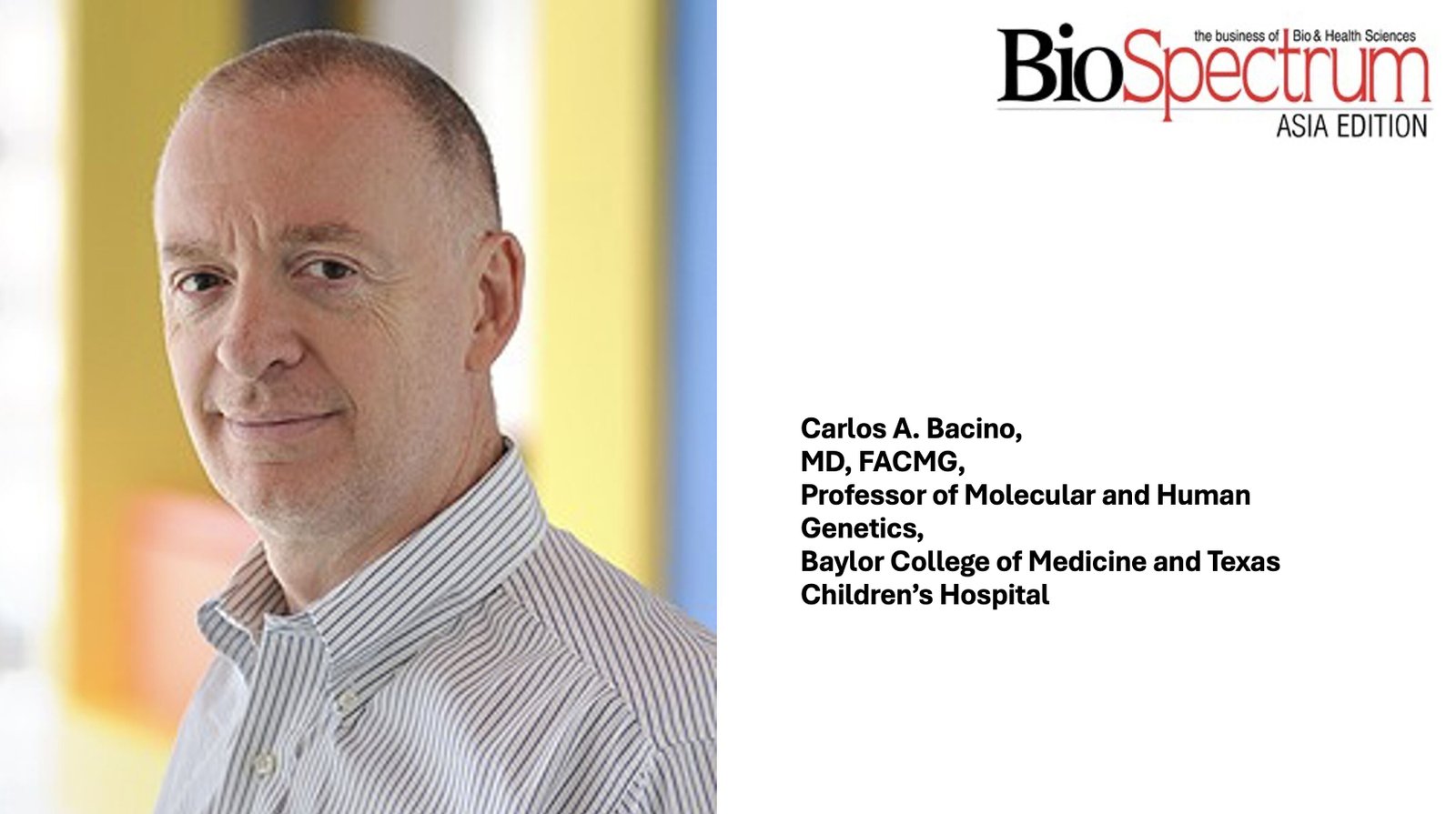
Achondroplasia, the most common form of genetic dwarfism, has historically relied on treatment approaches that require frequent administration and careful long term management. Advances in peptide based therapies are now reshaping the therapeutic landscape by targeting the molecular pathways that regulate skeletal growth. In this conversation with BioSpectrum Asia, Carlos A. Bacino, MD, FACMG, Professor of Molecular and Human Genetics at Baylor College of Medicine and Texas Children’s Hospital, explains how YUVIWEL, a once weekly prodrug of C type natriuretic peptide designed for sustained systemic exposure, may represent a meaningful step forward. He discusses the clinical differentiation of the therapy, pivotal trial outcomes supporting FDA approval, and the potential impact of sustained CNP signalling on growth, skeletal alignment, and patient quality of life.
How does YUVIWEL’s once weekly design and continuous CNP exposure differentiate it clinically from previous approaches, and what does this mean for skeletal development and outcomes?
A: YUVIWEL is a prodrug of C-type natriuretic peptide (CNP) administered once weekly, designed to provide continuous exposure of active CNP to receptors on tissues throughout the body. Furthermore, YUVIWEL has a long half-life of over five days, providing continuous systemic exposure to CNP over the weekly dosing interval. Other approved treatments for achondroplasia consist of a daily injection of a CNP analog.
What key efficacy and safety findings from the pivotal trials supported FDA approval, particularly in terms of annualised growth velocity and overall tolerability?
A: In the pivotal 52-week trial of navepegritide (YUVIWEL), 84 children with achondroplasia (ages 2–11) were randomized 2:1 to YUVIWEL or placebo. As reported in JAMA Pediatrics, YUVIWEL increased annualized growth velocity by 1.49 cm compared to expected growth for achondroplasia[i]. The treatment was well tolerated, with no clinically significant side effects, no symptomatic hypotension, and minimal injection site reactions.
Beyond linear growth, is there evidence or ongoing research on how sustained CNP exposure may impact broader complications associated with achondroplasia?
A: In the pivot trial, additional benefits beyond growth included improved skeletal alignment and body proportionality, as well as positive changes in health-related quality of life.i Patients that received the treatment showed an improvement of the tibial-femoral angle. In addition, there was also improvement in fibula to tibia length ratio and mechanical axial deviation; all of these are proxy measurements for leg alignment.
From a patient and caregiver perspective, how meaningful is the shift to a once weekly treatment model in day-to-day life?
A: Weekly dosing of YUVIWEL will help prevent injection fatigue that typically results from prolonged drug use and daily injections. It is likely that weekly injections will improve adherence, decrease injection-site discomfort and needle phobia, and reduce the burden that is typically associated with chronic use and disease burden perception. In the pediatric population, caretakers must handle the injections which create further stress and demands in their schedule. A once-weekly regimen may help ease this burden and support improved quality of life.