
Image credit: Global Young Scientists Summit 2026
Over 400 young researchers from 57 countries will gather in Singapore from 5-9 January for the Global Young Scientists Summit (GYSS) 2026, organised by the National Research Foundation, Singapore (NRF). This is the largest number of participants at GYSS since its inauguration in 2013.
GYSS’ mission is to inspire the next generation of scientific leaders by providing unique opportunities for promising young scientists from Singapore and around the world to engage directly with eminent scientists, including Nobel Laureates. Twenty-one research luminaries will be gracing this year’s Summit.
Professor Tan Chorh Chuan, Permanent Secretary (National Research and Development), said “Talent is what drives research and innovation. Research leaders come from young talented scientists who develop the ambition and motivation to push the frontiers of knowledge and the horizons of their application. The GYSS seeks to catalyse this crucial process by exposing promising young minds from around the world to some of the most accomplished scientists of our time.”
Immersive programme designed to inspire and engage young researchers:
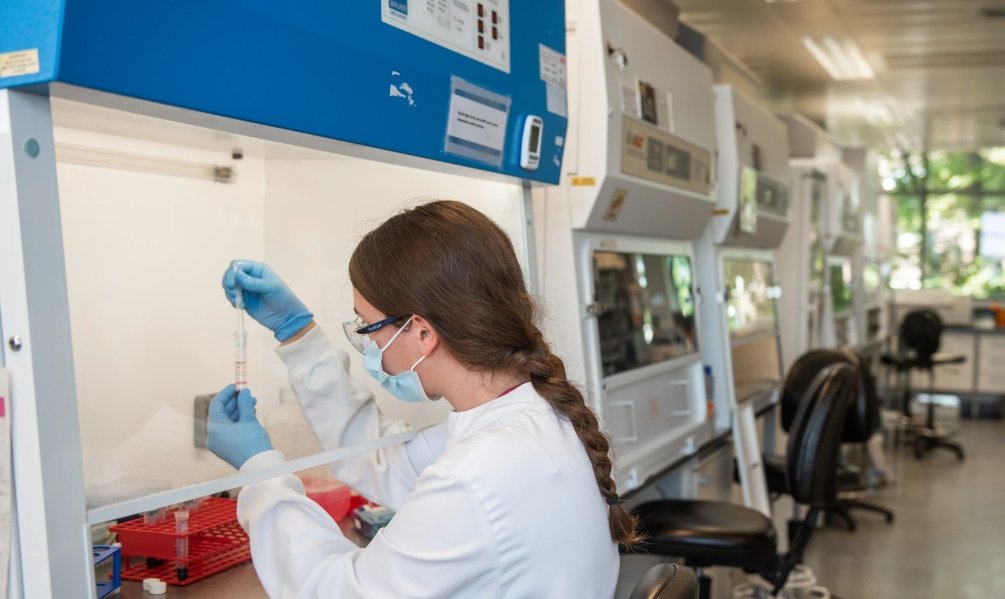
Through the course of the five-day GYSS programme, the young scientists will engage in twenty plenary lectures, four interactive panel discussions, and more than ten small group fireside chat sessions, which cover diverse scientific fields from quantum technology and artificial intelligence to neuroscience and chemistry. Participants will also have the opportunity to visit leading research laboratories at the Agency for Science, Technology and Research (A*STAR), the Campus for Research Excellence and Technological Enterprise (CREATE), the National University of Singapore (NUS), Nanyang Technological University, Singapore (NTU), Singapore Management University (SMU), and Singapore University of Technology and Design (SUTD).
Catalysing connections and career growth:
GYSS 2026 is designed to be highly participatory with many interactive sessions that foster dialogue between rising researchers and established leaders across disciplines. In line with this, participants can:
Present and showcase their work through poster presentation sessions and quickfire pitch segments, allowing researchers to articulate their ideas and receive feedback from peers and experts.
Participating as a speaker for the first time at the Summit, Professor David Baker, 2024 Nobel Laureate in Chemistry, said, “Attending the Global Young Scientists Summit offers a valuable opportunity to engage with bright, emerging researchers in science and technology. It’s a chance to exchange ideas and perspectives that can spark meaningful collaborations and contribute to the advancement of scientific progress.”
“The GYSS offers young researchers a unique platform not only to learn from but also to engage directly with some of the world’s leading scientific minds,” said Professor Kae Nemoto, Centre Director of the OIST Centre for Quantum Technology in Okinawa and Director of the Global Research Centre for Quantum Information Science in Tokyo, who is also a first-time speaker at GYSS. “It’s an invaluable opportunity for young researchers to immerse themselves in cuttingedge discussions, receive mentorship, and forge meaningful connections that can shape their careers and foster collaborations that last well beyond the Summit itself.”
Plenary lectures and panel huddles on cutting-edge science:
At GYSS 2026, some of the world’s foremost scientists will share their groundbreaking research and innovative ideas in twenty plenary lectures. This includes a plenary by Professor Sir Venki Ramakrishnan (2009 Nobel Prize in Chemistry), titled “Why We Die,” which will delve into the latest biological understanding of why organisms age and die and examine the scientific advances that are reshaping our knowledge of ageing, longevity and the potential to extend healthy lifespans. His talk will highlight how breakthroughs in ageing research are transforming what was once a philosophical question into a rigorous scientific pursuit.
Another highlight is Professor Joan Rose’s (2016 Stockholm Water Prize) plenary on the critical issue of water quality and sustainability in her lecture “Advancing Genetic Pollution Diagnostics for Healthy Waters.” Prof Rose will discuss the accelerating global water pollution crisis, exacerbated by climate change, population growth, and increased industrial activities.
In addition to the plenary lectures, GYSS 2026 will feature four panel huddles that provide young researchers with opportunities to engage in lively and thought-provoking discussions on some of today’s most pressing scientific challenges. These panel huddles will cover a wide range of important topics, such as how AI is shaping the future of research and technology. Another session will explore the future of computational power, where panellists will compare supercomputing and quantum computing and their potential to revolutionise industries.