Singapore researchers develop rapid iron measurement to enhance cartilage repair via cell therapy
February 26, 2026 | Thursday | News
A novel, rapid and non‑destructive method was developed to provide real-time insights into iron flux in mesenchymal stromal cells (MSCs) using a micromagnetic resonance relaxometry (µMRR) device
SMART
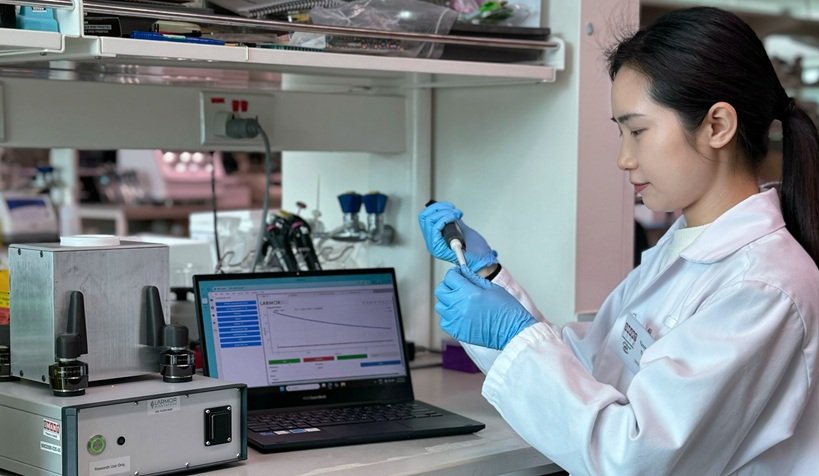
Image credit: SMART CAMP
The breakthrough offers a Promising pathway toward more consistent and efficient manufacturing of high‑quality MSCs used in regenerative therapies, which are used to treat joint diseases such as osteoarthritis, chronic joint degeneration conditions, and cartilage injuries.
Regenerative therapies hold significant promise for patients with the potential to repair damaged tissues rather than simply manage symptoms. However, one of the biggest challenges in bringing these therapies to patients lies in the unpredictable quality of the MSC’s chondrogenic potential — a cell’s ability to develop and form cartilage tissue — during the in vitro manufacturing process.
Even when grown under controlled laboratory conditions, MSCs are prone to losing some of their potential and ability to form cartilage tissue, leading to inconsistent cartilage repair outcomes due to the varying quality of MSC batches. Existing tests that evaluate the quality of MSCs’ cartilage‑forming potential are destructive in nature, which causes irreversible damage to the cells being tested and renders them unusable for further therapeutic or manufacturing purposes.
Using an inexpensive benchtop micromagnetic resonance relaxometry (µMRR) device, the approach enables real‑time monitoring of cellular iron changes without damaging the cells. As an inexpensive benchtop device, the µMRR device can be easily integrated into existing laboratories and manufacturing workflows, enabling routine, real‑time quality monitoring without significant infrastructure or cost barriers. The study also found that iron homeostasis is highly correlated with the MSC’s chondrogenic potential, where significant iron uptake and accumulation will reduce the cell’s ability to form cartilage. The researchers also found that supplementing the cell growth process with ascorbic acid (AA) helps regulate iron homeostasis by limiting iron flux, thereby improving the MSC’s chondrogenic potential.
Using this novel method, spent media are collected as samples and treated with AA. The µMRR device is then used to track and provide real-time insights into small iron concentration changes within the spent media. These iron concentration changes reflect how MSCs take up and release iron and can provide an early indicator of whether a batch is likely to succeed in forming good cartilage.
These findings allow manufacturers to not only monitor MSCs quality for cartilage repair in real time, but also to assess when, and to what extent, interventions such as AA supplementation are likely to be beneficial - supporting efficient manufacturing of more effective and consistent MSC‑based therapies.
“One of the key challenges in cartilage regeneration is the inability to reliably predict whether MSCs will retain their chondrogenic potential during manufacturing. Our study addresses this by introducing a rapid, non-destructive method to monitor iron flux dynamics as a novel critical quality attribute (CQA) of MSCs' chondrogenic capacity. This approach enables early identification of suboptimal cell batches during culture, enhancing quality control efficiency, reducing manufacturing costs, and accelerating clinical translation,” said Dr Yanmeng Yang, Postdoctoral Associate at SMART CAMP and first author of the paper.
“Our research sheds light on a fundamental biological process that, until now, has been extremely difficult to measure. By monitoring iron flux in real time without destroying the cells, we can gain actionable insights into a cell batch’s chondrogenic potential, which allows for early decision-making during the manufacturing process. The findings support µMRR‑based iron monitoring as an effective quality control strategy for MSC-based therapy manufacturing, paving the way for more consistent and clinically viable regenerative medicine for cartilage regeneration,” said Professor Jongyoon Han, Co-Lead Principal Investigator at SMART CAMP, Principal Investigator at SMART AMR, MIT Professor and corresponding author of the paper.
Building on these findings, the researchers plan to carry out future preclinical and clinical studies to expand this approach beyond quality control in manufacturing, with the aim of establishing µMRR as a validated method for the clinical translation of MSC-based therapies in patients for cartilage repair.
The research conducted at SMART was supported by the National Research Foundation Singapore under its Campus for Research Excellence and Technological Enterprise (CREATE) programme.
Image Caption: SMART CAMP Postdoctoral Associate Dr Yanmeng Yang using the µMRR device to measure changes in iron levels in MSCs